How to Survive a Marvel Rivals Lose-and-End Challenge Without Tilting
Want articles like this for your own video to promote it on YouTube and Google? Order them through the Telegram bot @sat_sit_bot. It writes articles around your video, embeds the video and publishes them on popular niche websites (no ads). Try it free: 50 articles on us.
Key takeaways
- A lose-and-end challenge means the video (or stream) stops the moment the player loses a single Marvel Rivals match.
- Jay3, a former Overwatch grandmaster player, published his Marvel Rivals version of the format on 2026-10-02.
- The format rewards flexible hero picks and punishes one-tricking, because one bad match ends the run.
- Marvel Rivals is a free-to-play 6v6 hero shooter where team-ups and role balance decide most fights.
- Viewer complaints in the comments center on throwers, forced off-role picks and Spider-Man players who tunnel one target.
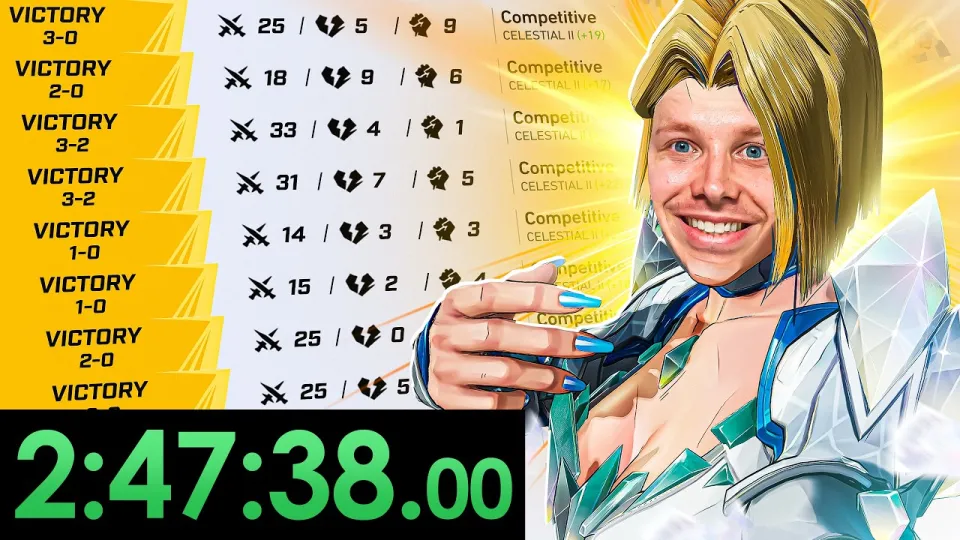
A Marvel Rivals lose-and-end challenge is a self-imposed rule where the run stops the moment you lose a single match, so survival depends on flexible hero picks, fast adaptation and keeping your temper in check. In practice you treat every game as a final: you lock a composition that covers healing and tanks, you swap off a hero that is being countered, and you never queue again while tilted. Jay3, a long-time Overwatch grandmaster turned variety streamer, built a video around exactly this format for Marvel Rivals, and you can watch him take the challenge live on his Twitch channel.
What the Marvel Rivals lose-and-end format actually is
The rule set is simple: one loss ends the recording, so the content lives or dies on a single match. That turns a normal ranked session into a survival run, because a 45–55 percent win rate that is perfectly fine for climbing is fatal when a single defeat closes the video. Creators use the format because it manufactures tension without any editing tricks: the viewer knows the next team fight could be the last one on screen.
For the player, the pressure changes decision-making in three ways:
- Hero selection becomes conservative. You pick the character you can actually perform on rather than the one you want to learn.
- Swaps happen earlier. If the enemy team runs a hard counter, you change before the fight is lost, not after.
- Mental reset matters more than mechanics. One angry queue after a bad round is how these runs usually end.
The format also explains the video's title promise: no highlight reel of wins, just a countdown that stops at the first defeat.
How to build a team that survives a single-elimination run
A team that survives a lose-and-end run in Marvel Rivals is one that fills both roles before anyone locks a duelist for fun. Marvel Rivals is a 6v6 hero shooter, and the teams that lose fastest are the ones with four or five damage dealers and one healer. Before the match starts, agree on a floor: at least one Strategist, ideally two, and at least one Vanguard who can hold space on the objective.
Practical rules that keep a run alive:
- Pick two Strategists by default. Sustain wins long fights, and long fights are where disorganized teams fall apart.
- Take one main Vanguard who can absorb pressure and one off-tank or bruiser who can dive.
- Leave the remaining slots for duelists, but require at least one of them to have reliable ranged damage.
- Use team-up bonuses where they exist. A composition that activates a synergy gets free value that a random pile of heroes does not.
- Decide who calls targets. Six players chasing different kills is how payloads and points get lost in overtime.
If you are the one running the challenge, you are also the one who has to enforce this. Polite role requests before the spawn doors open work far better than angry instructions after the first lost fight.
Hero picks and swaps that protect a no-loss run
Flexibility beats mastery in a format where one defeat ends everything, so keep at least three heroes ready across two roles. The most common way a run dies is a player refusing to leave a duelist pick that the enemy team has already solved. Marvel Rivals rewards counter-swapping heavily, and the hero roster is wide enough that almost every popular pick has an answer.
A simple swap checklist:
- If your backline keeps dying to a diving assassin, take a hero with crowd control or self-sustain instead of more damage.
- If the enemy Vanguard is walking through your team unchallenged, add ranged burst and focus that target first.
- If your team cannot break a fortified position, switch to a hero with vertical mobility or area denial.
- If you personally are 0-for-4 on duels, stop dueling. Play the objective and let your team carry the damage.
Streamers who play this format for content usually keep one comfort pick per role and treat everything else as a tool. That is also why the challenge suits players with broad hero pools more than specialists.
Typical viewer doubts about Marvel Rivals challenge runs
Viewers of these videos usually raise the same three doubts: that the run is rigged, that teammates ruin it, and that the format punishes solo players unfairly. The rigging suspicion is understandable, since a video can simply cut the losses out. The honest answer is that the format only works if the rule is real, and the tension disappears the moment viewers suspect otherwise. A creator who keeps the rule intact gets more engagement from a short run than from a long fake one.
The teammate problem is real and shows up constantly in comments under Marvel Rivals content. Players describe matches thrown by a tank who teleports the team into the enemy spawn, or a healer who abandons the role after one death. In a lose-and-end format, one such teammate can end the entire recording, which is exactly why the challenge is harder than it looks. The format also punishes off-role picks: a player who queues as damage and is forced onto support often feeds, and the run pays for it.
A third recurring complaint concerns target-focused duelists, particularly Spider-Man players who chase one enemy across the map while the objective is lost. Against that, the counter is boring but effective: stay near your Strategists, force the diver to fight into two players instead of one, and let them waste their cooldowns.
Why the format works as Marvel Rivals content
Marvel Rivals is a free-to-play 6v6 hero shooter built around team-ups between Marvel characters, and that design makes single-elimination runs unusually watchable. Every match has visible synergy plays, dramatic ultimate exchanges and comeback potential, so the stakes of a one-loss rule are easy to follow even for a viewer who has never played. A run can end in eight minutes or stretch for hours, and neither outcome feels scripted.
The format also mirrors what many players already experience in ranked: placement matches full of throwers, teams that refuse to heal, and streaks that collapse after one bad game. Watching a skilled player navigate the same chaos, with the added cost of losing the video, is the appeal. Jay3's background as a former Overwatch grandmaster gives the run a recognizable skill baseline, and his channel has been branching into Marvel Rivals alongside its Overwatch roots, which is why long-time subscribers sometimes ask for Overwatch content in the comments.
Where to find Jay3's Marvel Rivals streams and socials
All of Jay3's channels and social accounts are listed below, with the live stream first because that is where unedited challenge attempts actually happen.
- Live stream: https://twitch.tv/jay3
- Twitter: https://twitter.com/jay3ow
- TikTok: https://tiktok.com/@jay3twitch
- Instagram: https://instagram.com/jay3twitch
- Discord: https://discord.gg/jay3
Final thoughts on beating a Marvel Rivals lose-and-end run
A lose-and-end challenge in Marvel Rivals is won by preparation, not by luck: two Strategists, a real Vanguard, three heroes you can play, and a hard rule against queueing while angry. The format exposes every weakness a player has, from hero pool to temper, which is what makes it worth watching and worth trying. Jay3's breakdown of the format shows how quickly a single lost team fight can end an entire session, and how much of survival comes down to swapping before it is too late. If you want to see the next attempt live, follow the stream at twitch.tv/jay3 and watch the rule play out in real time.
Source: IF I LOSE, THE VIDEO ENDS... (Marvel Rivals) · Markdown version
Questions & answers
What happens if the player loses in a Marvel Rivals lose-and-end video?
The run stops and the video ends at that match, which is the whole premise of the format. That means every game is played as if it is the last one, with conservative hero picks and early swaps. Creators use the rule because it creates real tension without editing tricks.
Is Marvel Rivals free to play, and does that matter for challenge runs?
Yes, Marvel Rivals is free to play, so anyone can attempt the format without buying the game. It matters because the challenge depends on a large player base and fast matchmaking, and a free 6v6 hero shooter provides both. You only need an account and a hero pool you can actually play.
How many healers should a team run to avoid losing a single match?
Two Strategists is the safest baseline for a no-loss run, because sustained healing decides long fights. Pair them with at least one Vanguard who can hold the objective and fill the rest with duelists. Teams that skip healing usually lose the first extended team fight.
Why do viewers complain about throwers in Marvel Rivals matches?
Because one teammate playing badly or deliberately can end a challenge run instantly, and players report tanks teleporting the team into enemy spawn or supports abandoning the role. In a normal session that is a single lost game; in a lose-and-end format it ends the recording. The counter is to queue with people you trust and to enforce role picks early.